

How will future valve disc technology develop?
Oct 20, 2025
As a valve disc supplier deeply entrenched in the industry, I've witnessed firsthand the remarkable evolution of valve disc technology over the years. Valve discs are critical components in various valve systems, playing a pivotal role in controlling the flow, pressure, and direction of fluids in countless industrial applications. From the early days of simple, rudimentary designs to the sophisticated, high - performance discs of today, the journey has been both fascinating and challenging. In this blog, I'll explore the potential directions that future valve disc technology might take.
Current State of Valve Disc Technology
Before delving into the future, it's essential to understand where we stand currently. Today, valve discs come in a wide range of materials, including Stainless Steel Valve Disc, Carbon Steel Valve Disc, and Cast Iron Valve Disc. Each material has its own set of properties and is chosen based on the specific requirements of the application.
Stainless steel valve discs are highly corrosion - resistant, making them suitable for applications in harsh chemical environments, food processing, and marine industries. Carbon steel valve discs offer high strength and are commonly used in high - pressure and high - temperature applications such as power generation and oil and gas pipelines. Cast iron valve discs, on the other hand, are cost - effective and are often used in low - pressure water systems.
In terms of design, modern valve discs are engineered to provide precise control of fluid flow. Advanced manufacturing techniques, such as computer - numerical - control (CNC) machining and precision casting, have enabled the production of valve discs with tight tolerances and complex geometries. This has led to improved performance, reduced leakage, and longer service life.
Technological Drivers Shaping the Future
Several technological trends are likely to have a profound impact on the development of future valve disc technology.
1. Materials Innovation
The quest for better materials is an ongoing pursuit in the valve disc industry. Researchers are constantly exploring new alloys and composite materials that can offer superior performance characteristics. For example, the development of advanced superalloys could lead to valve discs with even higher strength, better corrosion resistance, and improved heat resistance. These superalloys could be used in extreme environments such as deep - sea oil drilling and aerospace applications.
Composite materials, which combine the best properties of different materials, also hold great promise. Carbon fiber - reinforced polymers (CFRPs) are lightweight, strong, and corrosion - resistant. Incorporating CFRPs into valve disc design could result in lighter and more energy - efficient valve systems. Additionally, self - healing materials are an area of active research. These materials can repair themselves when damaged, potentially extending the service life of valve discs and reducing maintenance costs.
2. Smart Technology Integration
The era of the Internet of Things (IoT) is revolutionizing the industrial sector, and valve disc technology is no exception. Future valve discs are likely to be equipped with sensors and communication devices that can collect and transmit data in real - time. These sensors can monitor parameters such as temperature, pressure, flow rate, and wear. By analyzing this data, operators can detect potential problems early, optimize valve performance, and schedule maintenance more effectively.
For example, a valve disc with a built - in wear sensor could alert operators when it is approaching the end of its service life, allowing for timely replacement and preventing costly downtime. Smart valve discs could also be integrated into larger industrial control systems, enabling remote operation and automation. This would improve process efficiency, reduce human error, and enhance overall system reliability.
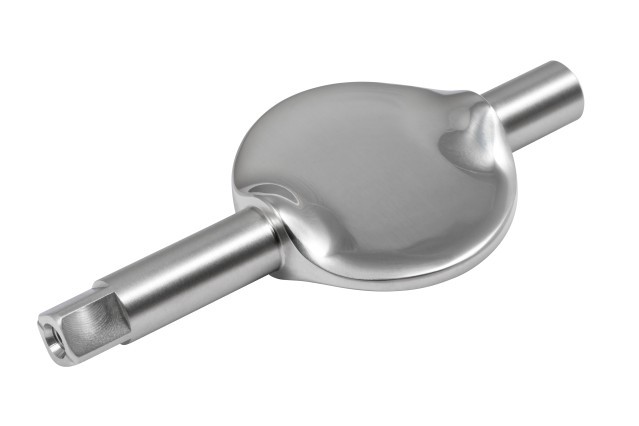

3. Additive Manufacturing
Additive manufacturing, also known as 3D printing, is a disruptive technology that is changing the way products are designed and manufactured. In the valve disc industry, 3D printing offers several advantages. It allows for the production of complex geometries that are difficult or impossible to achieve with traditional manufacturing methods. This means that valve discs can be optimized for specific applications, resulting in improved performance.
3D printing also enables rapid prototyping, reducing the time and cost required to develop new valve disc designs. Manufacturers can quickly produce and test different prototypes, making design iterations more efficient. Additionally, 3D printing can use a variety of materials, including metals, polymers, and ceramics, providing greater flexibility in material selection.
Challenges and Considerations
While the future of valve disc technology looks promising, there are also several challenges that need to be addressed.
1. Cost
The development and implementation of new technologies often come with a high cost. For example, advanced materials and smart sensors can be expensive, which may limit their widespread adoption. Manufacturers will need to find ways to reduce costs without sacrificing performance. This could involve economies of scale, process optimization, and partnerships with suppliers to negotiate better prices.
2. Standardization
As valve disc technology evolves, there is a need for standardization to ensure compatibility and interchangeability. New materials, designs, and smart features need to be standardized so that valve discs can be used in different valve systems and industries. International standards organizations will play a crucial role in developing and promoting these standards.
3. Regulatory Compliance
Valve discs are used in a variety of industries that are subject to strict regulations. Future valve disc designs must comply with these regulations, which can vary depending on the application and the region. For example, valve discs used in the food and beverage industry must meet strict hygiene standards, while those used in the nuclear industry must adhere to safety regulations.
Implications for the Valve Disc Supplier
As a valve disc supplier, these technological developments present both opportunities and challenges. On the one hand, we have the opportunity to offer more advanced and innovative products to our customers. By investing in research and development, we can stay ahead of the competition and meet the evolving needs of the market.
On the other hand, we need to adapt our manufacturing processes and business models to accommodate these changes. This may involve training our employees on new technologies, upgrading our manufacturing facilities, and collaborating with technology partners.
Conclusion and Call to Action
The future of valve disc technology is full of exciting possibilities. With materials innovation, smart technology integration, and additive manufacturing, valve discs are set to become more efficient, reliable, and intelligent. As a valve disc supplier, we are committed to being at the forefront of these developments, providing our customers with the highest quality valve discs that meet their specific needs.
If you are in the market for valve discs and are interested in exploring the latest technological advancements, we invite you to contact us for a consultation. Our team of experts can help you select the right valve disc for your application and provide you with the best solutions. Let's work together to embrace the future of valve disc technology.
References
- "Valve Handbook" by J. S. Tuzson
- "Materials Science and Engineering: An Introduction" by William D. Callister Jr. and David G. Rethwisch
- "Additive Manufacturing Technologies: 3D Printing, Rapid Prototyping, and Direct Digital Manufacturing" by Ian Gibson, David W. Rosen, and Brent Stucker