

How to simulate fatigue conditions for a valve disc?
Jan 21, 2026
Hey there! As a valve disc supplier, I've been in the thick of understanding how crucial it is to test valve discs under fatigue conditions. You see, a valve disc might seem like a simple component, but it goes through a ton of stress and wear in real - world applications. So, today, I wanna share with you how to simulate fatigue conditions for a valve disc.
First off, we need to grasp what causes fatigue in valve discs. Fatigue is basically the weakening of a material over time due to repeated loading and unloading. In the case of valve discs, this can be caused by things like pressure fluctuations, temperature changes, and mechanical vibrations. For example, when a valve opens and closes multiple times, the valve disc experiences different levels of stress with each cycle.
Let's start with mechanical testing, which is one of the most common ways to simulate fatigue. We can use a testing machine, like a servo - hydraulic universal testing machine. This bad boy can apply a controlled load to the valve disc. You set up the valve disc in the machine, and then you can program it to apply a specific frequency and amplitude of load. The frequency represents how often the load is applied, and the amplitude is how much force is being applied.
For instance, if your valve is going to be used in a system where it opens and closes rapidly, you'd set a high frequency on the testing machine. If it's a system with high - pressure surges, you'll need to set a high - amplitude load. You'll keep running these tests for a specific number of cycles, which is determined by the expected lifespan of the valve in its actual application.
Another aspect to consider is the type of load. There are different types of loads that a valve disc can experience in the real world, such as tensile, compressive, and shear loads. You can simulate these by changing the way the machine is set up. For tensile loads, the machine pulls the valve disc apart, while for compressive loads, it squeezes it. Shear loads are more complex and involve sliding forces on the valve disc.
Now, let's talk about environmental factors. Temperature plays a huge role in the fatigue of valve discs. Many industrial applications involve extreme temperatures, either very hot or very cold. To simulate this, we can use environmental chambers. You can place the valve disc in a chamber and set the temperature to the desired level.

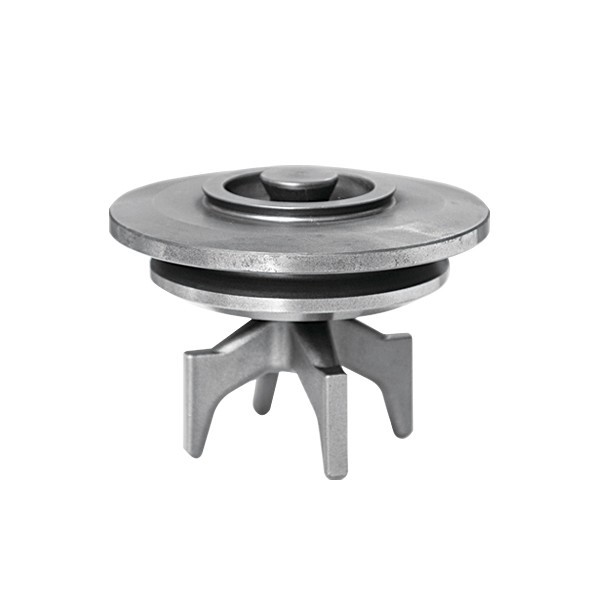
For example, if your valve is going to be used in a high - temperature steam system, you can set the chamber to a high temperature, say around 300 - 400 degrees Celsius. Then, you pair this temperature testing with the mechanical loading. The combination of high temperature and mechanical stress can accelerate the fatigue process, helping you to see how the valve disc will perform in real - world conditions much faster.
Corrosion is also a major factor. In a lot of industrial settings, valve discs are exposed to corrosive substances. To simulate this, you can use a salt spray test chamber. You spray a salt - water solution on the valve disc while it's being mechanically loaded. The salt - water mimics the corrosive environment, and the mechanical loads add to the stress on the valve disc. This way, you can see how corrosion affects the fatigue life of the valve disc.
When it comes to choosing the right valve disc material, we offer a variety of options. We have Carbon Steel Valve Disc, which is known for its high strength and relatively low cost. It's a great choice for general - purpose applications where the valve isn't exposed to extremely corrosive environments.
Alloy Steel Valve Disc is another option. Alloy steels are made by adding other elements to steel, like chromium, nickel, or molybdenum. This gives them enhanced properties, such as better corrosion resistance and higher strength. They're perfect for more demanding applications, like in the oil and gas industry.
And then there's Stainless Steel Valve Disc. Stainless steel is highly resistant to corrosion, making it ideal for applications where the valve disc will be in contact with water or other corrosive fluids. It also has good mechanical properties, which means it can withstand a fair amount of stress.
After simulating the fatigue conditions, we need to analyze the results. You can use non - destructive testing methods like ultrasonic testing or magnetic particle testing to check for cracks and other defects on the valve disc. These methods can detect flaws that aren't visible to the naked eye, allowing you to identify potential failure points before they become a major problem.
Once you've completed all the tests and analyzed the data, you'll have a good understanding of how your valve disc will perform under real - world fatigue conditions. This information can help you make improvements to the design, choose the right material, and increase the lifespan of the valve disc.
As a valve disc supplier, we're always here to help you with your needs. Whether you have questions about testing, want to know more about our materials, or are ready to place an order, we're just a message away. We understand that every application is unique, and we're committed to providing you with high - quality valve discs that meet your specific requirements.
If you're in the market for valve discs and want to discuss your project, don't hesitate to reach out. We're eager to work with you and help you find the perfect solution for your fatigue - resistant valve disc needs.
References
-ASM Handbook Committee, ASM Handbook Volume 19: Fatigue and Fracture, ASM International, 2005.
-Shigley, J. E., & Mischke, C. R., Mechanical Engineering Design, McGraw - Hill, 2004.
- Suresh, S., Fatigue of Materials, Cambridge University Press, 1998.