

How to improve the fatigue resistance of an aluminum impeller?
Oct 30, 2025
Hey there! As an aluminum impeller supplier, I've seen firsthand the importance of fatigue resistance in these components. An impeller that can withstand repeated stress without failing is crucial for long - term performance, especially in high - demand applications. So, let's dive into how we can improve the fatigue resistance of an aluminum impeller.
1. Material Selection
The first step in enhancing fatigue resistance starts with the right material. When it comes to aluminum impellers, not all alloys are created equal. Some aluminum alloys have better inherent fatigue properties than others. For example, 6061 - T6 aluminum is a popular choice. It offers a good balance of strength, corrosion resistance, and machinability. The T6 temper means it has been solution heat - treated and artificially aged, which gives it improved mechanical properties.
We also need to pay attention to the purity of the aluminum. Impurities can act as stress raisers, initiating cracks and reducing fatigue life. High - purity aluminum alloys tend to have fewer inclusions, which can significantly enhance fatigue resistance. As a supplier, we source our aluminum from trusted suppliers who adhere to strict quality control measures to ensure the purity of the material. You can check out our Aluminum Impeller product page to see the high - quality alloys we use.
2. Design Optimization
The design of the impeller plays a huge role in its fatigue resistance. One key aspect is the shape of the blades. A well - designed blade should have smooth curves and transitions. Sharp corners and edges can cause stress concentrations, which are prime locations for crack initiation. By using computer - aided design (CAD) software, we can simulate the stress distribution on the impeller under different operating conditions. This allows us to optimize the blade shape to minimize stress concentrations.
Another design factor is the thickness of the impeller. A thicker impeller may seem stronger, but it can also lead to uneven stress distribution and increased weight. We need to find the right balance. Through finite element analysis (FEA), we can determine the optimal thickness for each part of the impeller to ensure uniform stress distribution and maximum fatigue resistance.
The number of blades also affects fatigue resistance. Too few blades may cause uneven flow and increased stress on the remaining blades, while too many blades can increase the overall weight and complexity of the impeller. We carefully select the number of blades based on the specific application requirements to achieve the best performance.
3. Manufacturing Processes
The way we manufacture the aluminum impeller can have a significant impact on its fatigue resistance. One of the most common manufacturing methods is casting. However, the quality of the casting process matters a lot. For example, in sand casting, proper gating and risering systems are essential to ensure a uniform and defect - free casting. Any porosity or shrinkage cavities in the casting can act as stress raisers and reduce fatigue life.
We also use precision machining after casting to achieve the required dimensional accuracy and surface finish. A smooth surface finish can reduce the likelihood of crack initiation. During machining, we use advanced cutting tools and techniques to minimize surface damage and residual stresses.
Heat treatment is another crucial step. After machining, the impeller may undergo a heat treatment process such as annealing or aging. Annealing can relieve residual stresses from the manufacturing process, while aging can improve the strength and hardness of the aluminum alloy, enhancing its fatigue resistance.
4. Surface Treatments
Applying surface treatments to the aluminum impeller can further improve its fatigue resistance. One popular surface treatment is anodizing. Anodizing creates a hard, protective oxide layer on the surface of the aluminum. This layer not only provides corrosion resistance but also helps to reduce friction and wear. A smooth, corrosion - resistant surface is less likely to develop cracks due to environmental factors.
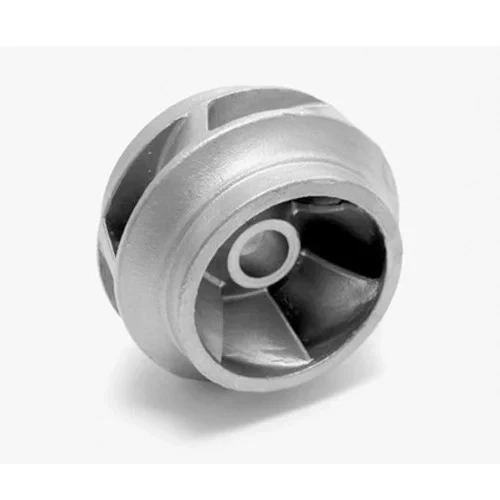

Another option is shot peening. Shot peening involves bombarding the surface of the impeller with small spherical particles. This process creates compressive stresses on the surface, which can counteract the tensile stresses that cause fatigue cracking. Compressive stresses make it more difficult for cracks to initiate and propagate, thus increasing the fatigue life of the impeller.
5. Quality Control
Quality control is an ongoing process that starts from the raw material stage and continues throughout the manufacturing process. We use non - destructive testing (NDT) methods such as ultrasonic testing and X - ray inspection to detect any internal defects in the impeller. These defects, if left undetected, can significantly reduce the fatigue resistance of the impeller.
We also conduct mechanical testing on sample impellers to ensure they meet the required fatigue performance standards. Tensile testing, hardness testing, and fatigue testing are some of the common tests we perform. By regularly monitoring and testing our products, we can ensure that every aluminum impeller we supply has excellent fatigue resistance.
Comparison with Other Impeller Materials
It's also worth comparing aluminum impellers with other common impeller materials like cast iron and stainless steel. Cast Iron Impeller is known for its high strength and wear resistance. However, it is heavier than aluminum and more prone to corrosion in certain environments. Aluminum impellers, on the other hand, are lightweight and have good corrosion resistance, which can be further enhanced through surface treatments.
Stainless Steel Pump Impeller offers excellent corrosion resistance and high strength. But stainless steel is more expensive than aluminum. Aluminum impellers provide a cost - effective alternative with good fatigue resistance when properly designed and manufactured.
Conclusion
Improving the fatigue resistance of an aluminum impeller requires a comprehensive approach that includes material selection, design optimization, proper manufacturing processes, surface treatments, and strict quality control. As an aluminum impeller supplier, we are committed to providing high - quality products that meet the demanding requirements of our customers.
If you're in the market for aluminum impellers or want to discuss how we can improve the fatigue resistance of impellers for your specific application, don't hesitate to reach out. We're here to help you find the best solutions for your needs.
References
- ASM Handbook Volume 2: Properties and Selection: Nonferrous Alloys and Special - Purpose Materials
- Aluminum Association, "Aluminum Design Manual"
- "Mechanical Behavior of Materials" by Donald R. Askeland and Pradeep P. Phule